ACCOUNTS PAYABLE AUTOMATION SERVICES, SYSTEMS & SOLUTIONS
  • HOME
  • SERVICES
    • ACCOUNTS PAYABLE AUTOMATION
    • BUSINESS PROCESS AUTOMATION
    • DATA TRANSFORMATION
    • SPEND MANAGEMENT
    • SUPPLIER PAYMENTS
  • ACCOUNTING SYSTEMS
    • AS400
    • EPICOR
    • EPIC EHR/EMR
    • INFOR
    • JD EDWARDS
    • LAWSON
    • MEDITECH INTEGRATION
    • MS DYNAMICS 365
    • MS DYNAMICS GP AP AUTOMATION
    • MS DYNAMICS NAV INTEGRATION
    • MS DYNAMICS INTEGRATION
    • NETSUITE AP AUTOMATION
    • ORACLE INTEGRATION
    • PEOPLESOFT INTEGRATION
    • QAD INTEGRATION
    • QUICKBOOKS INTEGRATION
    • SAGE INTEGRATION
    • SAP INTEGRATION
  • INDUSTRIES
    • AGRICULTURE
    • CONSTRUCTION
    • FOOD & BEVERAGE
    • HEALTHCARE
    • HIGHER EDUCATION
    • HOSPITALITY
    • LIFE SCIENCES
    • MANUFACTURING
    • RETAIL
    • TECHNOLOGY
    • TRANSPORTATION
  • RESOURCES
    • AP Automation ROI Calculator
    • Evolution of Invoice Processing: Tracing the Shift to Automation
    • The Costly Pitfalls of Manual Invoice Processing
    • Maximizing Cost Savings: How CFOs Can Leverage Invoice Process Improvements
    • A Day in the Life of an Payables Department: Unveiling the Essentials
    • The Significance of Three-Way Purchase Orders: Enhancing Efficiency and Accuracy with AP Automation
    • Revolutionizing Efficiency: The Comprehensive Benefits of Implementing Accounts Payable Automation in Organizations
    • The Power of Efficiency: Calculating Time and Cost Savings in the Accounts Payable Process with AP Automation
    • Vision360 Enterprise: Transforming Controllers' Roles and Why They Love It
    • Why BlueCreek Software: A Game Changer for Efficiency with Vision360 Enterprise
    • Revolutionizing Accounts Payable: The Power and Potential Concerns of AI Invoice Processing
    • Navigating Reluctance: Understanding Why Companies Hesitate to Implement Invoice Process Improvements
    • How AP Automation Transforms Finance at Every Level
    • Getting Started: Steps to Streamline and Optimize the Entire AP Process
    • Unlocking Efficiency and Savings: The Benefits of Invoice Optimization
  • CONTACT
    • LETS TALK
    • TRUST & SECURITY
    • SUBMIT RFP
    • SUPPORT
    • ABOUT
    • CAREERS

Accounts Payable Automation Solutions & Services

  ELIMINATE Non-Essential Accounts Payable Tasks

Accounts Payable Automation Software, Solutions & Services
Accounts Payable Automation | Vision360 Enterprise
We provide our clients with Accounts Payable Automation services, systems, software and solutions that eliminate the tedious and expensive tasks associated with manual invoice processing. The companies we work with are free of manual AP related tasks that are slowing down your business.

Are you tired of wasting time and money on outdated financial processes? By eliminating the waste caused by inefficient, error-prone manual tasks, your company will realize a tremendous savings and significant payback with accounts payable automation.

Traditional accounts payable processing relies heavily on invoices being shuffled back and forth between the finance departments, approvers and managers. This back and forth causes a delay of invoices being approved and processed for payment in a timely manner resulting in higher than average processing costs, late payment fees and credit holds.

​Vision360 Enterprise Accounts Payable Automation  (AP Automation) offers solutions that optimize the process of receiving, processing, approving, matching and integrating the payables process with ERP systems. Vision360 Enterprise creates a touchless, paper-free environment , eliminating error-prone processes, enforcing business rules and reducing costs.
Accounts Payable Automation Invoice Automation
In this article we provide many reasons why accounts payable automation may be just what your accounts payable department needs to deal with the challenges associated with the manual processing of supplier invoices.
100 REASONS WHY YOU MAY NEED ACCOUNTS PAYABLE AUTOMATION

HOW LONG HAS ACCOUNTS PAYABLE AUTOMATION BEEN AROUND?

Accounts payable automation has been in existence for more than a decade, with a history that spans over 10-15 years. However, despite its longevity, many companies face barriers when it comes to adopting this service, primarily due to cost considerations.

Implementing accounts payable automation requires a comprehensive technology stack to streamline the processing of transactional documents. Various types of documents are involved in accounts payable, such as invoices, credit memos, checks, check requests, internal forms, and supplier statements. Each of these documents has its own unique structure, although there are similarities across different suppliers.

To effectively automate the processing of these documents, specialized technology is required. This technology must possess the capability to intelligently read, analyze, and accurately interpret the data contained in these documents. However, this niche technology comes at a significant expense, which acts as a deterrent for many companies seeking to implement accounts payable automation. The associated costs can create a barrier to entry, limiting the adoption of this service within the industry.

Therefore, while accounts payable automation has been available for a considerable period, impediments such as the high cost of the technology required have hindered widespread adoption.

HOW DOES ACCOUNTS PAYABLE AUTOMATION WORK?

INVOICE CAPTURE

Your vendors can submit invoices for payment directly into the AP Automation system or hard copy invoices can be converted to digital by scanning them using your existing equipment and/or mailed to one of our shared service centers where incoming invoices are converted to secure digital invoices each day. By utilizing Vision360's best-in-breed data capture AI OCR technology and cross checking invoice data against your existing databases all captured data is verified for accuracy ensuring the highest level of data accuracy possible.

Based on your specific invoice processing rules in Vision360 Enterprise, supplier invoices are automatically routed for review and approval by the appropriate staff member. If an invoice exceeds a users approval limit that invoice is then escalated up to the next authorized approver. To simplify the G\L coding invoices pass through a set of validation rules to ensure coding is correct the first time and auto-coding templates further enhance this process by eliminating the need for anyone to manually code an invoice. 

INVOICE APPROVAL


TOUCHLESS PROCESSING

While Non-PO invoices might require someone on your staff to review and approve those invoices, the same is not necessarily true for PO invoices. Purchase Order invoices are automatically checked against your PO database and receiving files when the invoice arrives. Utilizing a series of cascading matching rules the Vision360 Enterprise system will attempt to auto-match PO invoices. Invoices that mis-match are flagged and sent to the appropriate personnel  for review.

Vendor and invoice data are systematically delivered and synchronized with your ERP system (SAP, Oracle, JDE, PeopleSoft, Lawson, Infor, Dynamics GP, QAD, Sage and more)  providing full end-to-end process automation. By connecting the accounts payable process with your ERP system this eliminates the need for AP Staff to manually enter invoices into the accounting system further leveraging your ERP investment and maximizing your return on investment.

ERP INTEGRATION


ARCHIVE & REPORTING

Supplier invoices are instantly available st any computer for immediate access and review by authorized users. Vision360's archive means paper is no longer needed to be filed or stored because invoices are only a mouse click away! Vision360's dashboard and reporting provides instant visibility to every single invoice. This allows users to access the information they need to analyze key performance indicators and invoice progress to watch for problems before they occur. 

Accounts Payable Automation | AP Automation

How can the use of dashboards provide valuable metrics and help manage invoices in the accounts payable process??

1. How can dashboard views and information slicing and dicing assist in the efficient management of invoices in the accounts payable process?

Dashboard views and information slicing and dicing assist in the efficient management of invoices in the accounts payable process by allowing users to have a comprehensive overview of the process. They can quickly analyze key metrics, such as pending invoices by due date or vendors, and make informed decisions. By having access to relevant information at their fingertips, users can effectively prioritize, process, and resolve invoices, ensuring smooth operations and timely payments.

2. How can dashboards help generate time and monetary value in the accounts payable process?

Dashboards help generate time and monetary value in the accounts payable process by providing full visibility into the process. Users can quickly identify invoices with payment discounts and prioritize them, ensuring that valuable discounts are captured. Additionally, by efficiently triaging invoices and resolving any issues, users can save time and prevent late fees, ultimately generating cost savings.

3. What are the potential consequences of not utilizing dashboards in the accounts payable process?

Not utilizing dashboards in the accounts payable process can lead to missed discounts and late fees. Without full visibility and quick access to information, invoices may go against the user, causing them to miss out on valuable discounts and incur additional costs.

4. How can invoices be triaged quickly in the accounts payable process?

Invoices can be triaged quickly in the accounts payable automation process by utilizing dashboard views and being able to slice and dice information. This allows users to quickly analyze and prioritize invoices based on various factors, ensuring efficient management of invoices.

5. What are the highly valuable metrics to be measured and managed in the accounts payable process?

The highly valuable metrics to be measured and managed in the accounts payable process include full visibility into the process by approvers, vendors, pending invoices by the due date, and invoices with payment discounts.

GETTING STARTED WITH VISION360 AP AUTOMATION?


​What are the steps?
  • Step 1: Discovery
  • Step 2: Configuration & Testing
  • Step 3: Go Live
  • Step 4: Training & Support

​What do I need to purchase?
  • Pay as you go system
  • No hardware or software to purchase
  • No annual software maintenance
  • All training and support included

Vision360 key features?
  • Instant visibility and statuses
  • Invoice approvals and exceptions
  • Automatically match and route invoices
  • Integrate payables with ERP system
Read out our latest guide "The Ultimate Guide to Accounts Payable Automation" to learn more!
SCHEDULE A DEMO

WHAT IS BUSINESS PROCESS OUTSOURCING (BPO) & HOW DOES IT AFFECT THE ACCOUNTS PAYABLE PROCESS?

Business Process Outsourcing (BPO) has emerged as a popular practice for many companies in the past couple of decades. It involves delegating certain business processes, such as accounts payable, to external service providers. The main objective behind BPO is to achieve cost savings and operational efficiency by leveraging specialized expertise and economies of scale.

Specifically, when it comes to the accounts payable process, BPO allows companies to offload the often complex and time-consuming tasks associated with managing supplier invoices and payments. Instead of dealing with these responsibilities in-house, companies can outsource them to third-party providers, often located in countries with significantly lower labor costs.

For many Chief Financial Officers (CFOs) and Controllers, this approach is appealing as it offers substantial cost savings. By offshoring the accounts payable process to regions with lower labor rates, companies can reduce their operational expenses and focus on core business activities.

However, there are challenges and potential risks associated with BPO, particularly in the accounts payable context. Entrusting transactional data processing to personnel located in different time zones and potentially speaking different languages can introduce friction in terms of relationship management with suppliers. This can lead to difficulties in resolving issues and managing exceptions effectively.

To overcome these challenges, companies often implement advanced workflow systems that allow for a hybrid approach to the accounts payable process. This involves a combination of offshore data processing and onshore personnel with the necessary relational aptitude to handle supplier interactions. By combining the efficiency of offshore data crunching with the local expertise and relationship management skills of onshore staff, companies can better triage and resolve problematic transactions.

It's worth noting that the practice of offshore BPO for accounts payable has faced criticism and undergone scrutiny due to geopolitical pressures and the rise of populist and nationalist movements. Some argue that bringing business processes back onshore is necessary to retain and create local jobs. For these individuals, the lack of trust and oversight in offshore BPO processes presents an insurmountable barrier, making it a leap of faith they are unwilling to take. However, it's important to recognize that offshore BPO continues to work well for many companies, offering cost savings and operational efficiencies when implemented with careful consideration and appropriate controls.

WHAT IS ELECTRONIC DATA INTERCHANGE (EDI) & HOW DOES IT CONTRIBUTE TO THE ACCOUNTS PAYABLE PROCESS?

Electronic Data Interchange (EDI) is a powerful tool that enables organizations to streamline their accounts payable processes by establishing seamless integration between purchasers and suppliers. It is a method primarily employed by large enterprises to efficiently manage their supply chain relationships, particularly with high-volume vendors. EDI automates the exchange of business documents and data between trading partners, eliminating the need for manual tasks and paper-based transactions.

One significant advantage of EDI in accounts payable automation is its ability to bypass other methods commonly used for automating payment processes. This is achieved through bi-directional integration, allowing for the smooth flow of information between purchasers and suppliers. By leveraging EDI, organizations can enhance efficiency, accuracy, and speed in their accounts payable operations.

Implementing EDI, however, can be a complex process, requiring efforts from both the supplier and the customer. This can be more easily managed by large companies with significant resources, enabling them to dictate the adoption of EDI to their supplier base. On the other hand, for small to mid-sized companies, the adoption of EDI may pose challenges due to limited IT resources and expertise. In such cases, the feasibility and impact of implementing EDI need to be carefully assessed, taking into consideration the level of influence the organization has over its supplier base.

Overall, EDI plays a crucial role in accounts payable automation by facilitating seamless integration, reducing manual tasks, and improving efficiency. While its setup and maintenance may be daunting for some organizations, the benefits it brings in terms of streamlined processes and enhanced supply chain relationships make it a valuable solution in the realm of accounts payable automation.

TAKE YOUR PAYABLES PROCESS A STEP FURTHER AND EARN CASH BACK?

Accounts Payable Automation Payments
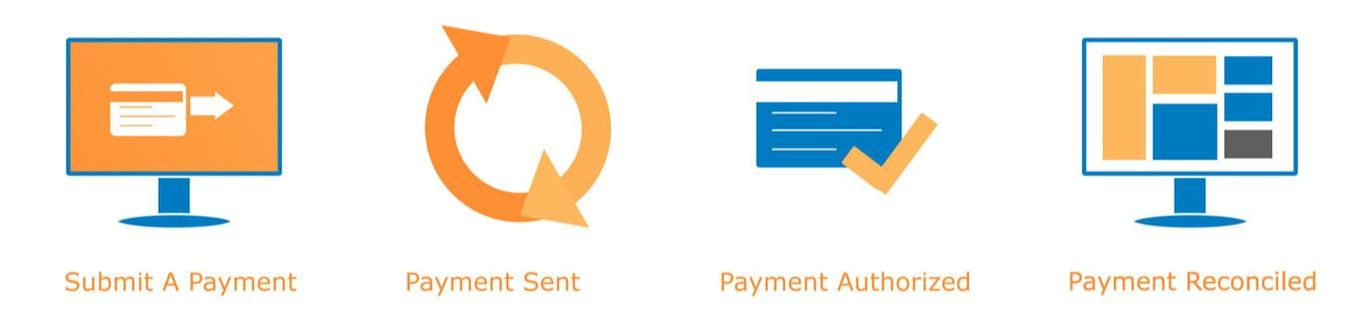
All of your vendor payments are easily reconciled using our payment portal and dashboards.
Your vendors process the payment as they would with any other credit card.
A unique credit card number is generated for each payment and is automatically delivered to your vendor for payment.
Your AP department submits a payable disbursement file that contains all of the vendor invoices to be paid.
Pending invoices can be leveraged to drive e-payment methods that reward the organization through various strategies. One such strategy is to utilize automation to offer faster payment to suppliers in return for an accepted discount. By implementing accounts payable automation, organizations can optimize their processes and digitally and dynamically enact these levers.

This approach goes beyond the traditional manual methods and can greatly enhance the organization's performance by providing additional value. If a supplier chooses not to comply with the discount, the organization can continue to follow the existing payment preferences according to the pre-negotiated terms.

This way, the organization can effectively utilize pending invoices to drive e-payment methods that not only benefit suppliers but also financially boost the overall performance of the organization.

WHAT CHALLENGES DO FINANCE EXECUTIVES FACE WHEN EMBARKING ON AN ACCOUNTS PAYABLE AUTOMATION PROJECT?

Finance and accounting leaders face several challenges when embarking on accounts payable automation. Firstly, they often grapple with organizational mandates from top-level management that need to be followed. These mandates may have specific requirements or timelines that must be adhered to, adding pressure to the implementation process.

Secondly, finance and accounting leaders typically operate under constant project and reporting deadlines. These deadlines can create additional stress when implementing accounts payable automation, as the transition may require significant time and effort to ensure a smooth and efficient workflow.

Thirdly, tight budgets can pose a challenge. Implementing accounts payable automation often requires financial investments, including the purchase of software or hiring external consultants. Finding the necessary funds within limited budget allocations can be a complex task for finance and accounting leaders.

Moreover, personnel resources may be constrained, making it difficult to allocate dedicated staff to handle the transition to accounts payable automation. This can result in delays or additional strain on existing team members who already have full workloads.

Banking challenges are another obstacle faced by finance and accounting leaders. Integrating accounts payable automation with banking systems can be complex and require coordination with multiple parties, adding another layer of complexity to the implementation process.

Furthermore, finance and accounting leaders must account for the ever-changing and demanding supplier base. As suppliers evolve their processes and systems, finance and accounting leaders need to ensure that the accounts payable automation solution remains compatible and adaptable to these changes.

All of these challenges require finance and accounting leaders to develop coping mechanisms to navigate the accounts payable automation journey effectively. While relying on addictive substances is not advisable, finding healthy coping mechanisms, such as effective time management strategies or seeking support from colleagues, can help finance and accounting leaders address these challenges and navigate the implementation process successfully.

Still have questions?
Attend one of our webinars!

Join a Webinar
All Rights Reserved 2025 Vision360 Enterprise® is a registered trademark of BlueCreek Software.   
​
Privacy

  • HOME
  • SERVICES
    • ACCOUNTS PAYABLE AUTOMATION
    • BUSINESS PROCESS AUTOMATION
    • DATA TRANSFORMATION
    • SPEND MANAGEMENT
    • SUPPLIER PAYMENTS
  • ACCOUNTING SYSTEMS
    • AS400
    • EPICOR
    • EPIC EHR/EMR
    • INFOR
    • JD EDWARDS
    • LAWSON
    • MEDITECH INTEGRATION
    • MS DYNAMICS 365
    • MS DYNAMICS GP AP AUTOMATION
    • MS DYNAMICS NAV INTEGRATION
    • MS DYNAMICS INTEGRATION
    • NETSUITE AP AUTOMATION
    • ORACLE INTEGRATION
    • PEOPLESOFT INTEGRATION
    • QAD INTEGRATION
    • QUICKBOOKS INTEGRATION
    • SAGE INTEGRATION
    • SAP INTEGRATION
  • INDUSTRIES
    • AGRICULTURE
    • CONSTRUCTION
    • FOOD & BEVERAGE
    • HEALTHCARE
    • HIGHER EDUCATION
    • HOSPITALITY
    • LIFE SCIENCES
    • MANUFACTURING
    • RETAIL
    • TECHNOLOGY
    • TRANSPORTATION
  • RESOURCES
    • AP Automation ROI Calculator
    • Evolution of Invoice Processing: Tracing the Shift to Automation
    • The Costly Pitfalls of Manual Invoice Processing
    • Maximizing Cost Savings: How CFOs Can Leverage Invoice Process Improvements
    • A Day in the Life of an Payables Department: Unveiling the Essentials
    • The Significance of Three-Way Purchase Orders: Enhancing Efficiency and Accuracy with AP Automation
    • Revolutionizing Efficiency: The Comprehensive Benefits of Implementing Accounts Payable Automation in Organizations
    • The Power of Efficiency: Calculating Time and Cost Savings in the Accounts Payable Process with AP Automation
    • Vision360 Enterprise: Transforming Controllers' Roles and Why They Love It
    • Why BlueCreek Software: A Game Changer for Efficiency with Vision360 Enterprise
    • Revolutionizing Accounts Payable: The Power and Potential Concerns of AI Invoice Processing
    • Navigating Reluctance: Understanding Why Companies Hesitate to Implement Invoice Process Improvements
    • How AP Automation Transforms Finance at Every Level
    • Getting Started: Steps to Streamline and Optimize the Entire AP Process
    • Unlocking Efficiency and Savings: The Benefits of Invoice Optimization
  • CONTACT
    • LETS TALK
    • TRUST & SECURITY
    • SUBMIT RFP
    • SUPPORT
    • ABOUT
    • CAREERS